
Criminal Cases in the Cottle County Courts
Cottle County uses an unusual court map. The 50th Judicial District serves Baylor, Cottle, King, and Knox Counties. It hears felonies and, under Cottle County's special jurisdictional arrangement, much of the criminal work that a constitutional county court would handle elsewhere. The constitutional county court may still receive and enter guilty pleas in misdemeanor cases. That overlap makes the combined clerk the best first stop for a felony, indictment, Class A misdemeanor, or Class B misdemeanor file.
Cottle County fine-only matters follow a different route. The countywide Justice of the Peace handles Class C cases within justice-court jurisdiction and performs magistrate work. Paducah Municipal Court keeps city ordinance cases, municipal citations, and its own failure-to-appear or capias records. Appeals from the region go to the Seventh Court of Appeals. A search at just one counter cannot clear every Cottle County court.
The official 50th District Court page shows the local court connection. Its published view helps place a Cottle County criminal case in the shared district structure.
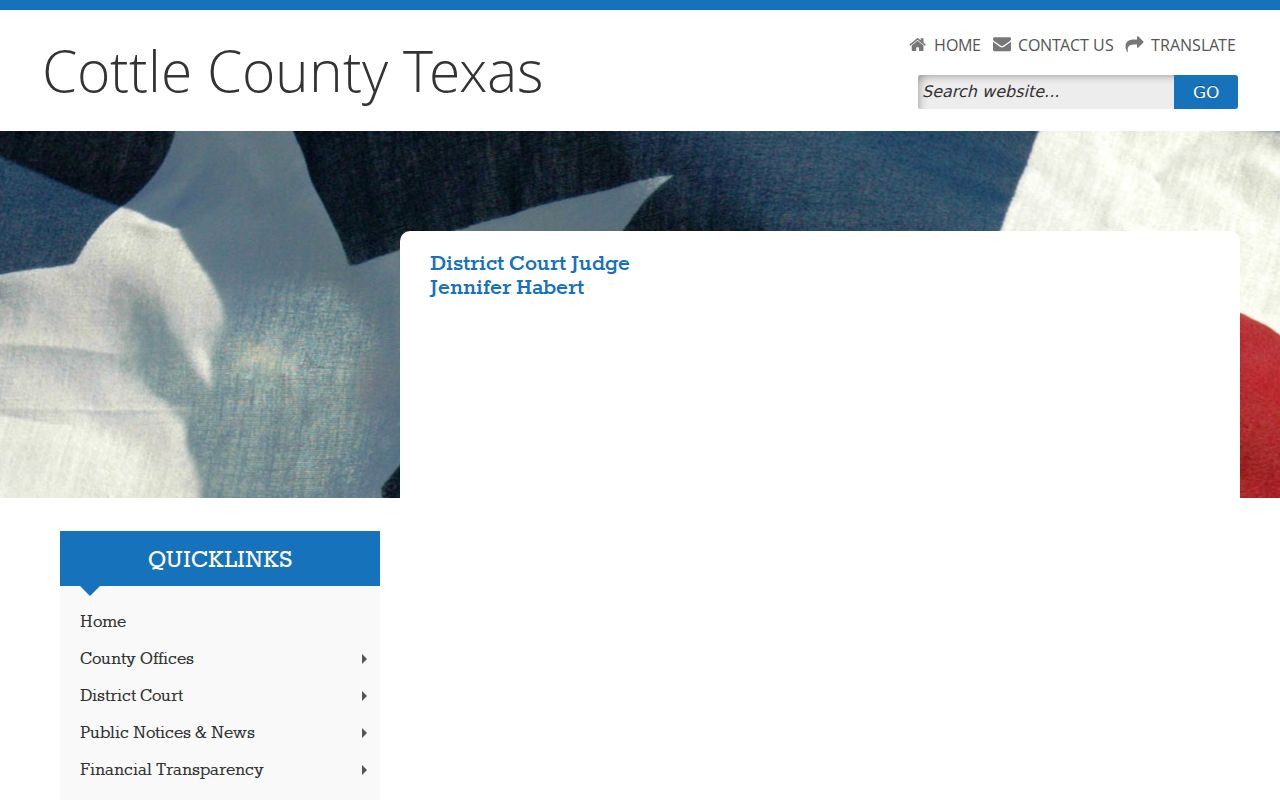
That shared district explains why the court name alone may not reveal where a paper file must be requested.
Cottle County Court Case Routing
Choose the office by the kind of charge and the place where it began. The combined Cottle County/District Clerk is the custodian for district and county-level filings. The Justice of the Peace keeps its own fine-only docket. Paducah Municipal Court holds municipal cases rather than sending every record into the district file. When the offense level is unclear, ask the combined clerk whether it is indexed as a county or district case, then check the lower court named on the citation.
| Court or office | Likely record | Verified route |
|---|---|---|
| 50th District Court and combined clerk | Felonies, transferred misdemeanor work, juvenile matters, and appeals within its jurisdiction | 815 9th Street; P.O. Box 717; 806-492-3823 |
| Cottle County Court | Constitutional county functions and some misdemeanor pleas | Ask the combined clerk how the case is indexed |
| Countywide Justice of the Peace | Fine-only charges, citations, magistrate records, and JP warrants | P.O. Box 307; 806-492-3515 |
| Paducah Municipal Court | City cases, citations, capias, and failure-to-appear entries | P.O. Box 759; 806-492-3131; paducah_court@outlook.com |
The Texas judicial directory is useful for verifying the office, court type, county, and current contact details. It is a directory, not a defendant or cause-number search.
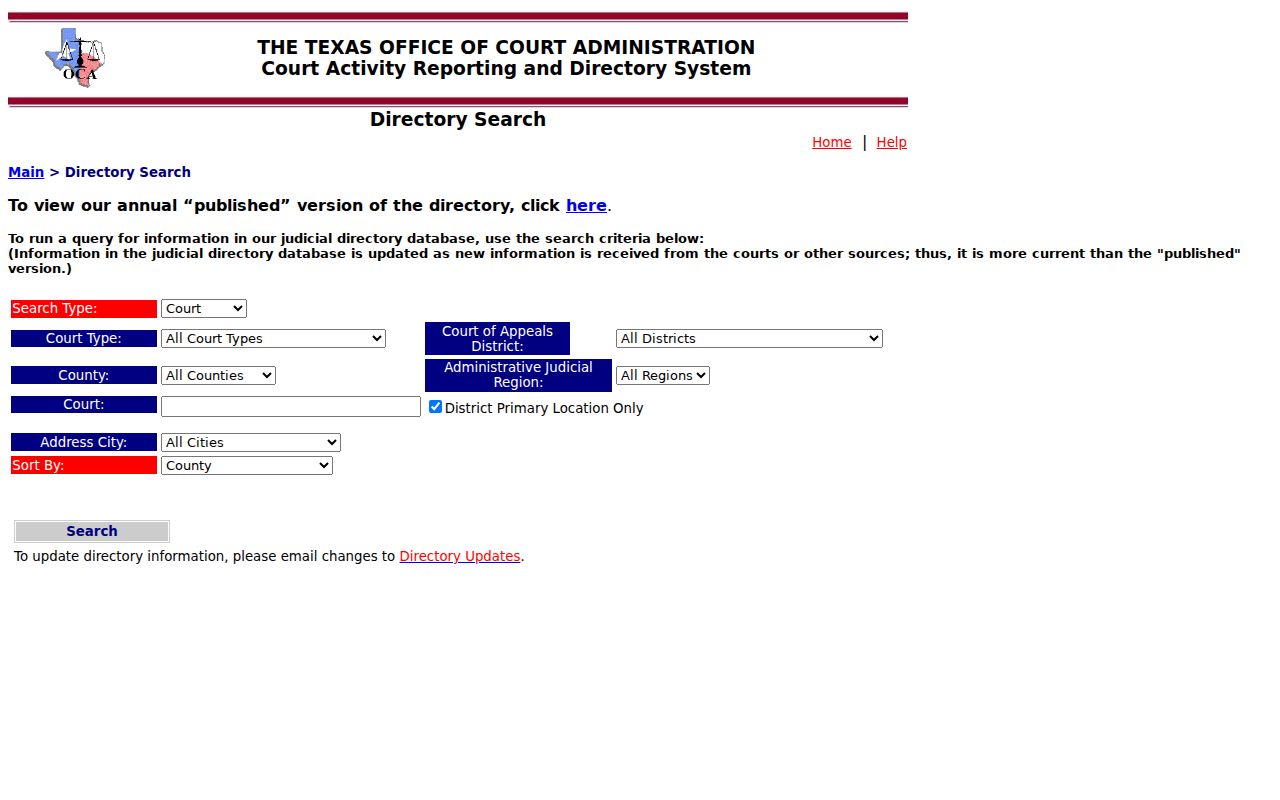
Use the directory to find a custodian, then submit the record request to that court.
How to Search Case Records
No official Cottle County criminal-case interface was found. Phone, mail, fax, and counter contact are the verified paths. Begin with enough detail to distinguish the file, but do not assume the office requires fields it has not published. The Cottle County clerk pages state no criminal-copy fee, search charge, date coverage, online payment method, hours, or turnaround. Confirm each point before sending payment or making a trip.
- Choose the likely court. Start with the combined clerk for a felony, indictment, or serious misdemeanor; use the JP or municipal court for its fine-only matters.
- Give the defendant's full name and an approximate filing or arrest year. Add the cause or citation number when known.
- Ask for the register of actions or docket sheet, charging instrument, judgment, disposition, and sentencing order that fit the purpose.
- Confirm which documents are public, whether inspection is limited to the counter, and the cost and payment method for plain or certified copies.
- Repeat the inquiry at another court level when the first office has no record. A district search does not resolve a JP or Paducah Municipal Court case.
The Cottle County District Clerk page supplies the central local contact for this process.
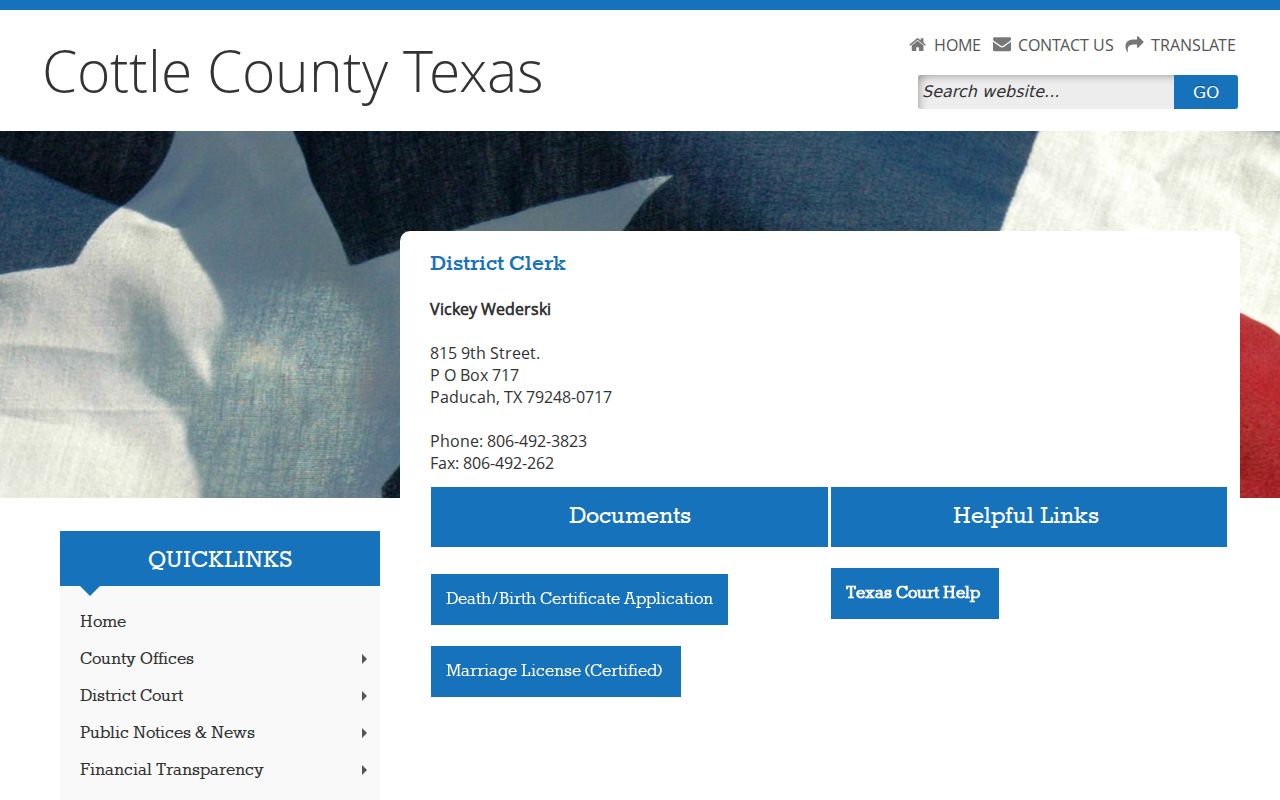
Its absence of a case-search form is important: the clerk, not an assumed portal, remains the direct route.
Cottle County Cases and re:SearchTX
re:SearchTX offers statewide tools for cases, filings, text in documents, and hearings. Users can sign in or register, enter keywords, apply filters, open details, export results, or save a search. Those controls may look like a ready statewide answer for a Cottle County criminal case. They are not.
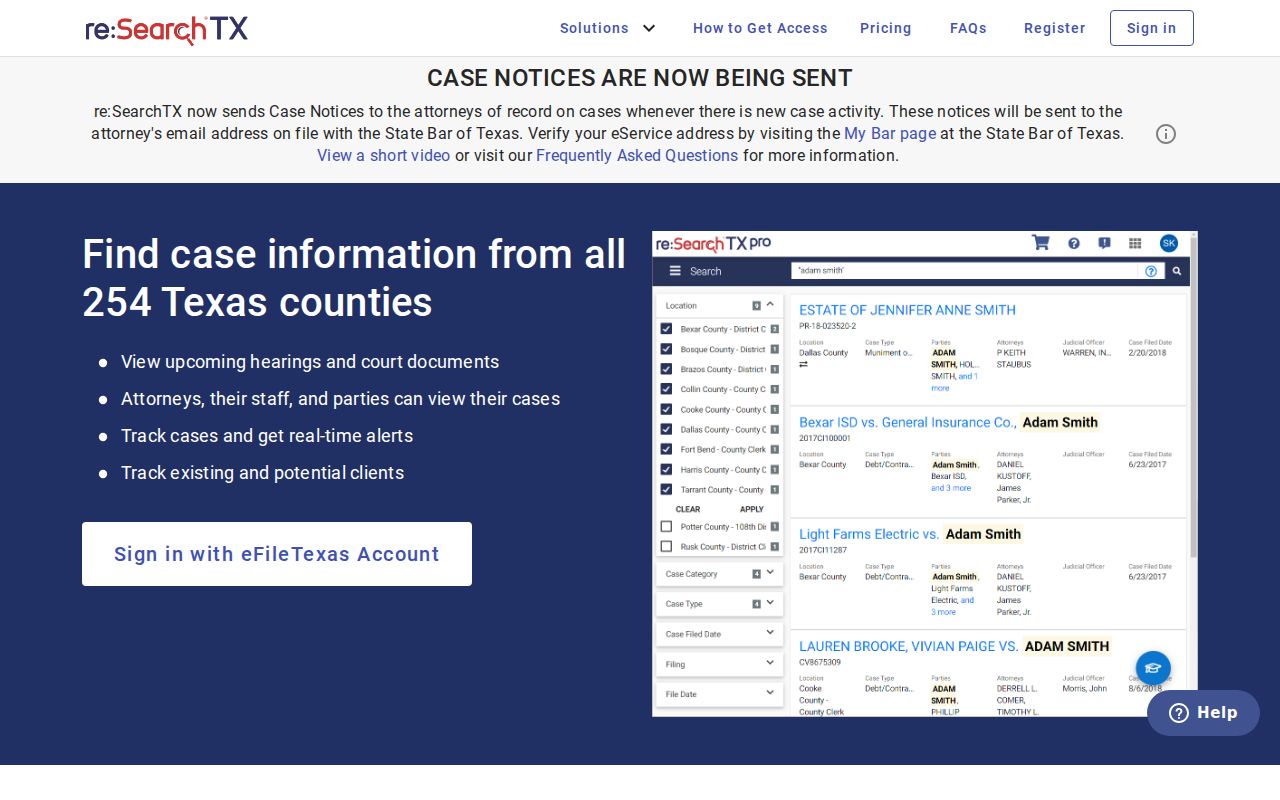
The Texas Judicial Council reported that the statewide collection contains millions of electronic documents but generally excludes criminal case records. Records in that collection date to 2016, yet the exclusion means a missing Cottle result cannot be read as proof that no criminal file exists. Use the portal only with that limit in mind.
| Field or control | Type | Required | What it does |
|---|---|---|---|
| Sign in or Register | Account control | Yes for portal functions | Uses eFileTexas credentials or a registration |
| Search category | Tabs or cards | Not stated | Cases, Filings, Text in Documents, or Hearings |
| Search | Keyword field | Not stated | Runs with Enter or the search icon |
| Left-side filters | Filter controls | No | Narrows by county, court, case, or party as access permits |
| Result actions | Links and controls | No | Open details, export, or save a search |
Note: A blank statewide portal result is not a countywide criminal-record clearance.
What the Case File Shows
A Cottle County court file follows the charge after it reaches court. It can show how the prosecutor framed the allegation, what the judge ordered, how the parties responded, and how the matter ended. This is distinct from the arresting agency's narrative and the jail's intake record. No anonymous local sample screen was available, so the items below are a request checklist, not a promise about online display.
| Case number and court | The cause identifier, filing court, judge, case type, and status. |
|---|---|
| Charging document | The complaint, information, or indictment and the filed offense statute or grade. |
| Docket entries | Filed motions, settings, orders, appearances, and other register-of-actions events. |
| Hearings and plea | Scheduled proceedings and the plea recorded by the court. |
| Disposition and judgment | Dismissal, acquittal, deferred adjudication, conviction, or another signed result. |
| Sentence and conditions | Confinement, fine, costs, restitution, or community-supervision terms stated in the order. |
Ask for the signed judgment or dismissal order when the outcome matters. A short docket label may omit terms that appear in the full order.
Cottle County Prosecutor Record Trail
Cottle County belongs to a four-county judicial district, and the District Attorney's official office is in Seymour rather than Paducah. The office is at 101 South Washington Street, Seymour, Texas 76380, with phone 940-889-2852. That does not move the Cottle County court file out of the local clerk's custody. It shows why the prosecutor and clerk may sit in different towns while working on the same cause.
The county also lists a County Attorney in Paducah. Official sources do not define how every matter is divided between the two prosecutors. Read the charging instrument or ask the clerk which prosecutor appears, instead of guessing from the charge name. Neither prosecutor page publishes a public case database, a diversion list, or a separate record-request form.
Stages of a Criminal Case
A Cottle County case can begin with an arrest or complaint, but the court file becomes the controlling trail once charges are filed. Texas law calls for prompt magistration after arrest, generally within 48 hours. The prosecutor may then change, decline, reduce, or add charges before filing. An indictment is a grand jury's formal felony accusation. An information is a prosecutor's charging instrument often used for misdemeanors.
Case flow: Charges Filed → Arraignment → Pretrial → Plea or Trial → Disposition → Sentencing
Each step can leave docket entries or signed papers. Arraignment records the charge and plea. Pretrial work can include discovery issues and motions. A plea or trial leads toward disposition, while sentencing states the legal result and conditions. An appeal creates a related record in the Seventh Court of Appeals. Dates vary by case, and the research supplies no reliable Cottle County stage-by-stage timetable.
Reading Cottle County Case Outcomes
Outcome words should be read as court terms, not as loose labels. The arrest charge may differ from the filed offense. A disposition describes how the filed case ended. The signed judgment or order provides the best evidence because it can identify the count, plea, finding, sentence, and any terms that a brief index line leaves out.
- Dismissed
- The filed prosecution ended without a conviction on that charge.
- Acquitted
- A judge or jury returned a not-guilty determination.
- Deferred adjudication
- The court postponed a guilt finding while community-supervision terms applied; it remains a court disposition unless restricted by law.
- Convicted
- The court entered an adjudication of guilt.
- No-bill
- The grand jury declined to return an indictment.
A status that looks incomplete may reflect a delay in entry, an older paper file, or a search at the wrong court. Ask the clerk for the final signed record before drawing a conclusion.
Access & Restrictions
Court case records do not use the Texas Public Information Act in the same way as sheriff reports. The Office of Court Administration access policy explains that Rule 12 covers judicial administrative records, while adjudicative case records remain with the court that maintains them. A Cottle County criminal-file request should therefore go to the proper clerk.
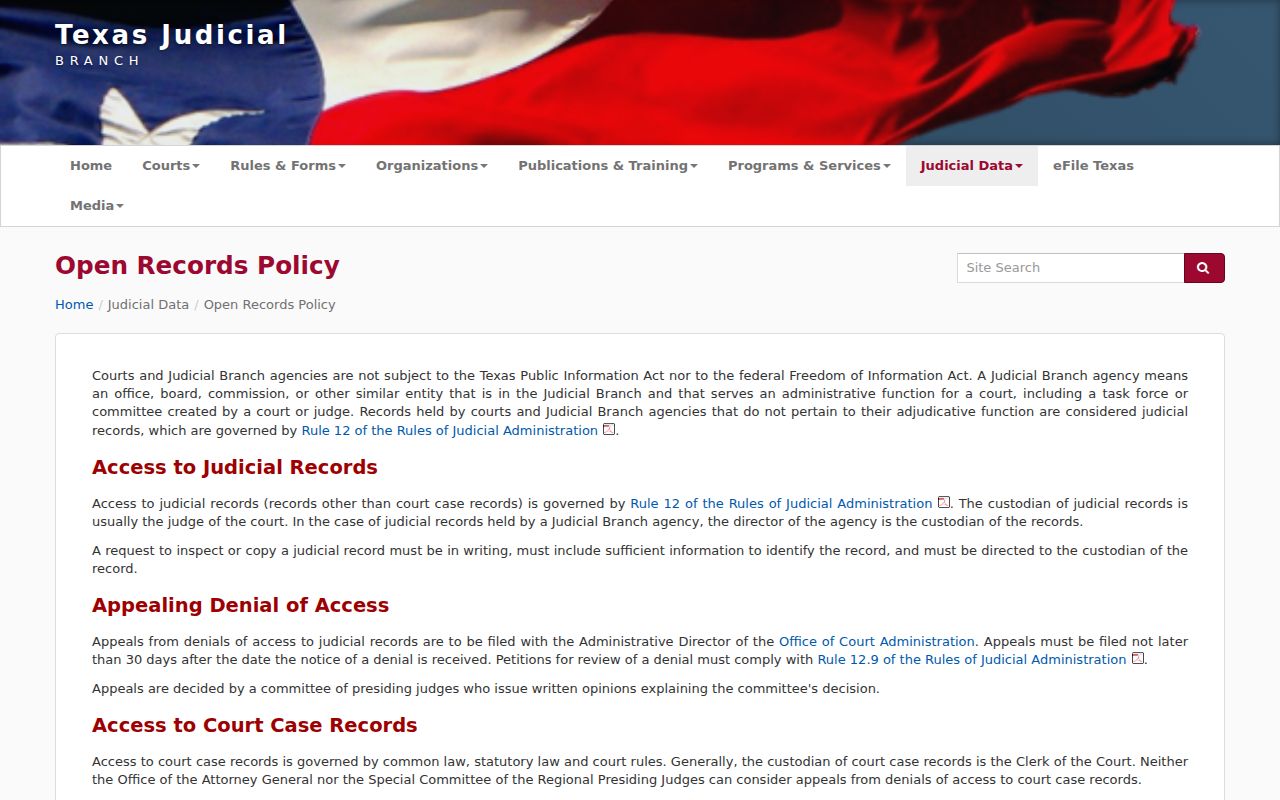
The policy distinction keeps a court-file request from being misdirected to a state administrative office.
Juvenile material, sealed matters, protected victim information, financial identifiers, and records covered by an expunction or nondisclosure can be withheld or redacted. Online access can also be narrower than inspection of a public paper file. If a known case does not appear, ask whether it is confidential, restricted, archived, indexed under another name, or held at a different court level.
Missing Cottle County Case Names
A name search can fail without proving that the case is absent. Spellings and aliases vary. Older material may not be digitized. A municipal citation can remain outside the district index, and a lower-court appeal may have more than one cause number. Start again with the full name, approximate year, court, charge level, and any citation or arrest number.
When identity is uncertain, do not treat a similar name as a match. Ask what identifier the clerk uses to distinguish files. For a broad review of one's own Texas history, fingerprint comparison through DPS is more reliable than name matching, but it still does not replace the local pleadings and signed Cottle County judgment.
Note: Check each plausible court before treating one clerk's no-result answer as final.