
Running a Sex Offender Check in Cottle County
The Texas Public Sex Offender Registry is the main public source for Cottle County. Texas Department of Public Safety, or DPS, publishes data that local registration authorities submit under Chapter 62. The statewide service is free and continuously available. Searchers can look for a named person or use an address, city, ZIP code, or county filter to review a place. A Cottle County registry result should be treated as one current public view of reported data. It does not replace the charging instrument, judgment, or sentence in the court file.
The Cottle County Sheriff has the local role for a registrant who lives outside a municipality unless DPS has named a central authority. Call 806-492-3131 or write to P.O. Box 887, Paducah, TX 79248, to confirm local appointment and reporting practices. The county publishes no separate offender map, local registry list, registry app, or registration-counter hours. For that reason, the state registry comes first, while the sheriff is the right local contact for an address concern or a question about compliance.
Cottle County Registry Search Fields
A place-based Cottle County registry search is useful when the person is not known by name. The interface offers distinct Cottle County routes for name, address, and higher-education searches, plus map and list views where available. Since the live application is dynamic, labels and radius choices can change. Read the current screen before submitting the query.
- Open the Texas registry and review its conditions of use.
- Choose a name, address, or higher-education search route.
- Enter known details and select Cottle County when the county filter is shown.
- Compare the result list carefully, then open the matching public profile.
| Field Label | Type | Required | Notes |
|---|---|---|---|
| Last Name | Text | Yes for name route | Searches the registrant surname. |
| First Name | Text | Route-dependent | Narrows a surname search. |
| Address | Text | Yes for address route | Sets the street location for a place search. |
| City or ZIP Code | Text or selection | Route-dependent | Can focus results around Paducah. |
| County | Dropdown | No | Select Cottle for countywide results. |
| Map or List | View control | No | Changes how available results are reviewed. |
Searching the Texas Public Sex Offender Registry
DPS runs the registry as a statewide publication layer. A Cottle County query can surface profiles tied to addresses or locations reported through the registration system. Match more than a name. Review aliases, physical details, address type, photograph, status, and offense information before deciding whether a result concerns the person or place intended. Similar names and incomplete inputs can lead a searcher to the wrong record.
The DPS registration program overview shows the state office behind that process and the public registry it supports.
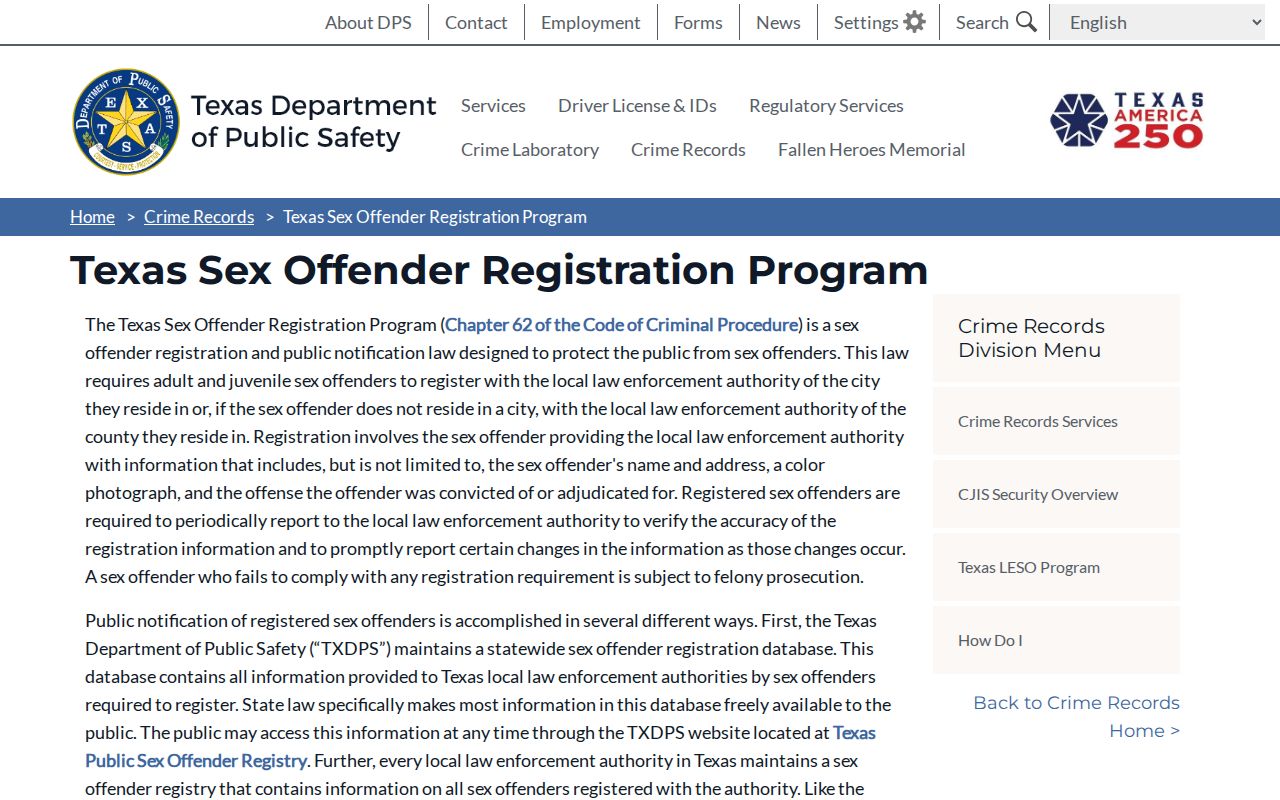
That official program page helps distinguish statewide publication from the Cottle County Sheriff's local collection and verification work.
When the Cottle County search seems too broad, switch to an address or Paducah city search. When it seems too narrow, check spelling, aliases, and the Cottle County filter. A blank result is not proof that no relevant registration exists. A person may be registered under another name or jurisdiction, the reported location may have changed, or the query may not match the portal's current input rules.
Cottle County Sex Offender Reporting Roles
The Cottle County Sheriff and DPS perform related but different jobs. A local registration authority receives and verifies required information. DPS then maintains the statewide system and publishes information made public by law. That split matters when something looks wrong. A search problem with the state interface belongs with DPS, while a suspected unreported move or local compliance concern should be sent to the sheriff or DPS without personal confrontation.
Cottle County Sheriff
Local registration authority outside a municipality unless a central authority is designated. Contact the sheriff about local registration steps, appointments, or suspected noncompliance.
Texas DPS
State registry administrator and public publisher. Contact DPS about the statewide program or public search interface.
The sheriff's published correspondence email is cottlesopubliccorrespondence@gmail.com. Keep a report factual. Identify the profile, the address or circumstance at issue, and why the information may be stale. Do not use ordinary email to send identity documents unless the office directs that method.
What a Registry Profile Shows
A public Texas registry profile joins identity, location, offense, and compliance information. Not every Cottle County profile will contain every possible field. Some Cottle County entries may show several addresses, vehicles, aliases, or identifying marks, while others show fewer details. Blank space is only missing public data. It does not prove that a vehicle, tattoo, job location, or other fact does not exist.
| Name and Aliases | Reported names plus the DPS SID when shown. |
|---|---|
| Photo and Description | Current public photograph, sex, race or ethnicity, age or birth date, height, weight, hair, eyes, scars, marks, and tattoos when reported. |
| Registered Address | Primary residence, address type, and other reported locations when public. |
| Offense Details | Description, statute or jurisdiction, conviction date, court, sentence, and victim age or sex category when displayed. |
| Risk and Status | Texas risk level, verification requirement, registration status, and end date where applicable. |
| Vehicles and Locations | Reported vehicle data and public occupational or educational locations, if supplied. |
The DPS registry FAQ explains risk, registration duration, and public notice.
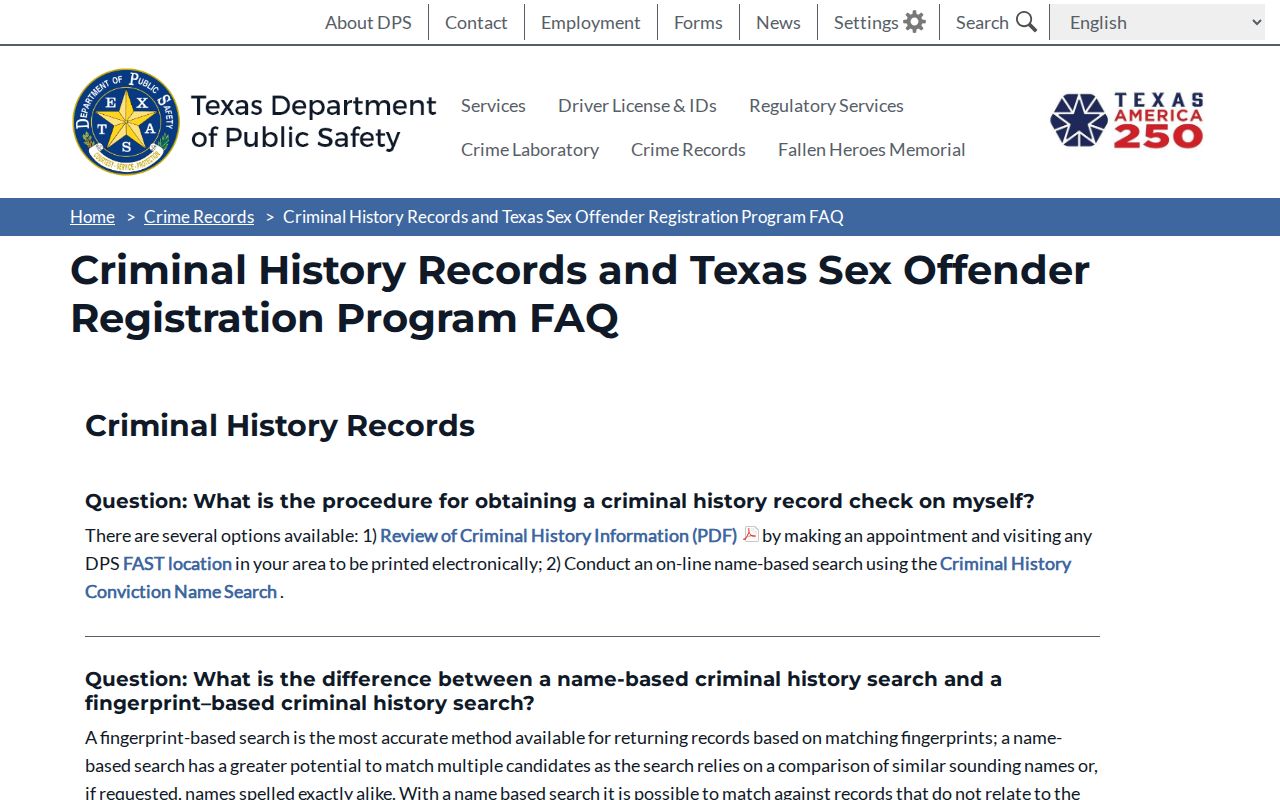
The FAQ gives context that a compact Cottle County search result cannot supply on its own.
Cottle County Registry Address Concerns
If a Cottle County profile address appears outdated, first reopen the record and confirm that the address type, city, and status were read correctly. A listed address may not mean what a reader assumes, and a partial profile should not be filled in with guesswork. Save the identifying details needed to tell the office which public profile raised the concern, but do not circulate the record through neighborhood posts or attach labels beyond what DPS reports.
Next, contact the Cottle County Sheriff at 806-492-3131 or DPS. State the observed mismatch in plain terms. The office can decide whether the information calls for verification or investigation. Failure to follow Chapter 62 registration duties can be prosecuted as a felony, but the registry user does not determine guilt. Never visit the listed address, question household members, follow a person, or attempt a private compliance check.
Note: Registry information can change after a move or verification, so recheck the official profile and let authorities handle any compliance issue.
Registration Requirements and Levels in Texas
Texas uses numeric risk levels, not the federal SORNA tier labels. Level 1 means low assessed danger and recurrence viewed as unlikely. Level 2 reflects moderate danger and possible recurrence. Level 3 reflects serious danger and recurrence expected. Civil Commitment is a separate court-designated status for a sexually violent predator population. The risk label describes an assessment. It does not, by itself, set how long someone must register.
| Texas Category | Meaning | Duration and Verification |
|---|---|---|
| Level 1, Low | Low assessed danger; recurrence considered unlikely | Ten years or life based on the offense; generally annual verification |
| Level 2, Moderate | Moderate assessed danger; recurrence may occur | Ten years or life based on the offense; generally annual verification |
| Level 3, High | Serious assessed danger; recurrence expected | Ten years or life; enhanced notice; some registrants verify more often |
| Civil Commitment | Court-designated sexually violent predator status | Generally lifetime under the qualifying offense or status |
Adults generally register for life or for ten years after discharge from incarceration, parole, or community supervision. Article 62.101 sets offense-based duration categories. Verification is generally annual, but Article 62.058 requires certain registrants to verify every 90 days. Read the profile and the governing offense together. Do not infer a Cottle County registrant's end date from risk level alone.
Cottle County Registry Notification Distances
Cottle County community notice for a high-risk registrant or a civilly committed sexually violent predator uses different distance rules based on the setting. DPS sends bilingual postcard notice at least within one mile in an unsubdivided area or within three blocks in a subdivided area when such a person moves into a community. In rural Cottle County, that one-mile rule can matter. In a platted part of Paducah, the block measure may be the relevant standard.
These notices support awareness. They do not authorize threats, exclusion by private force, surveillance, or public shaming. Local authorities may publish more information as allowed by law. A postcard also does not replace the current registry profile, since the public entry may include a photograph, aliases, offense facts, vehicles, verification terms, and more recent address reporting. Use both forms of official notice with care.
Cottle County Registry Searches Beyond Texas
The Texas registry is the right first source for a Cottle County location, but it is not a national search. A person may have registration information maintained by another state, territory, tribal jurisdiction, or the District of Columbia. The U.S. Department of Justice provides a cross-jurisdiction layer through the National Sex Offender Public Website.
The National Sex Offender Public Website routes public searches across participating jurisdictions.
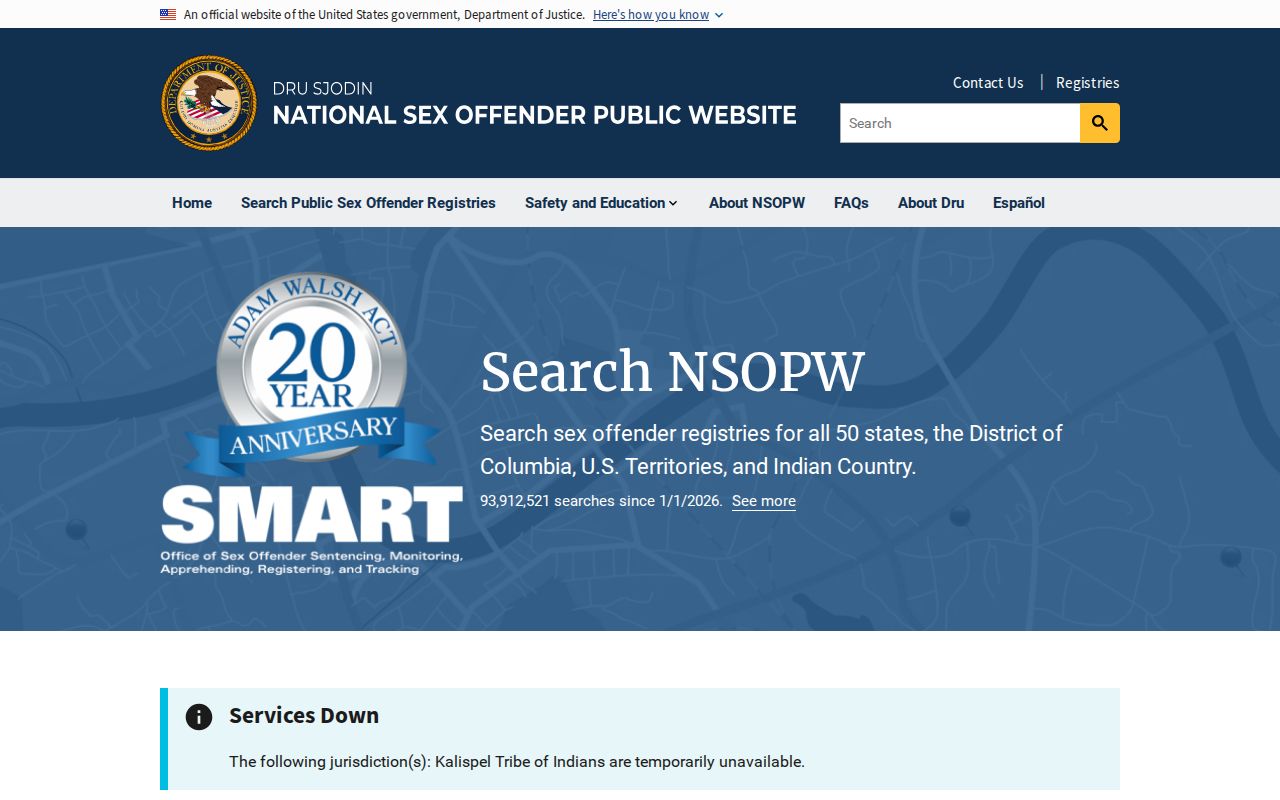
NSOPW extends a Cottle County safety search beyond Texas, while the DPS profile remains the primary source for Texas-specific risk and registration details.
A Cottle County result from another jurisdiction should be read under that jurisdiction's terms. Texas Level 1, 2, and 3 labels should not be mapped to federal tier language or another state's labels. If a person-specific match matters, compare identifiers across the official profiles instead of assuming that similar names describe one person.
Lawful Use and Community Notification
Registry access serves personal safety, family planning, and community awareness. It does not create a license to punish or confront. Cottle County residents should use official data to understand reported locations, registration status, and known offense information, then take any suspected violation to the sheriff or DPS. A public profile is not a forecast of a new offense, and risk labels should be read only in the terms DPS supplies.
Use registry information lawfully: Texas Code of Criminal Procedure Chapter 62 governs public registration information. Misusing registry data to harass, threaten, intimidate, or commit another offense against a registrant or household can be a crime under Texas law.
Keep a safety response proportionate. Verify a profile through DPS. Use the Cottle County Sheriff's published line for a local concern. In an emergency, use emergency services. Personal confrontation can put people at risk and can interfere with official compliance work.